 PipPeek
FOR A CLOSER LOOK
Hard odd one out puzzles by PipPeek
Some grids give the difference away. Others hide it in a paw pad, a single stripe or one changed line. This page is for the second kind: a hard find-the-odd-one-out puzzle that rewards a slower, more systematic look.
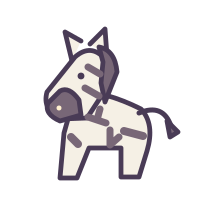
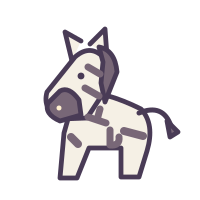
Below is a real 8×8 PipPeek puzzle. The same character repeats across the grid, and one detail is different. Take your time, then reveal the answer when you are ready.
- 8×8 real sample
- Challenges up to 20×20
- Relaxed or timed
Opens the animal chapter directly. Start at 3×3 or continue your saved progress.
Show the difference
One zebra has a curved side stripe.
Why a bigger grid feels harder
A 20×20 grid holds 400 pictures. The rule does not change: exactly one picture has one visual difference. What changes is the amount of repetition around it. Your eye has more chances to compare the same shapes, and more places to lose track of what it has already checked.
That is a search challenge, not a knowledge test. You do not need to identify the animal, remember its name or know a category. The answer is visible the whole time; it is simply surrounded by matching copies.
Three ways to search a dense grid
A consistent route beats a random scan. These habits work on an 8×8 sample and on the largest 20×20 challenge.
- Divide the grid into bands. Finish one row or block before moving on.
- Pick a landmark on the character, such as an ear, paw, window or ring, and compare that same landmark everywhere.
- Use Zoom in and Hint when you are stuck. The hint fades half of the matching pictures, giving you fewer objects to compare without revealing the answer.
How to read a hard odd one out puzzle
Start with the largest shapes before the smallest details. On a dense grid, the outline of each character is easier to compare than a tiny facial feature. Once the outlines match, move inward to ears, paws, patches or accessories.
Work in a fixed order and say the feature to yourself as you scan: outline, left side, right side, centre. A route prevents you from rechecking the same area and missing the one copy that changed.
If you lose your place, zoom in or use the hint. The hint fades half of the matching pictures; it does not mark the answer. That keeps the search going instead of turning it into a reveal.
Hard odd one out puzzles should still be fair
PipPeek keeps one visual change per grid and uses the same base drawing throughout. There are no trick categories, hidden words or two-picture comparisons. Replaying a hard grid does not award progress twice, so you can practise it without changing your collection.
Relaxed mode has no time limit. Timed mode gives 30 seconds per level and does not subtract extra time for a wrong tap. The harder grids are optional; the chapter game still starts at 3×3 and unlocks larger sizes as you play.
Questions before you play
What is the hardest puzzle on PipPeek?
The largest chapter grids go up to 20×20. The independent challenge mode also offers sizes from 11×11 to 20×20, with a personal best for each puzzle. A 20×20 grid is the densest visual search in the game.
Is this an impossible find the odd one out?
No. Every grid has exactly one visible difference and uses the same base drawing. A hard or difficult grid can take longer, but it is not a trick with no answer. If you want to see the format first, the pictures-with-answers guide shows three samples with reveal controls.
Do I need to be good at spot the difference?
No. PipPeek is an odd one out game: you compare pictures inside one grid, not two separate images. The difference is always a visible detail, and a wrong tap lets you keep looking.
Can I use a hint on a hard puzzle?
Yes. Each level has one free hint that fades half of the matching pictures. Using it does not stop you from finishing the level. On the daily puzzle, a hint keeps your time off that day’s leaderboard.
Is there a time limit on hard puzzles?
Not by default. Relaxed mode lets you take as long as you like. You can switch to Timed for 30 seconds per level, and the pause button covers the grid while you take a break.
Keep looking
Try another puzzle, or read the guide that fits your next visit.